
A parent-friendly approach to game ratings: helping parents understand loot boxes, in-game spending and financial risk
Zain Mahmood – Parent Zone design manager
Monetisation is now a routine part of gaming, and many parents worry about what this means for their children. While app stores provide age ratings and customer reviews, they often say little about loot boxes, in-game purchases or financial risk, leaving parents to make judgement calls with limited information. We wanted to understand what parents feel is missing – so we asked them.
Parent Zone has been investigating, mapping and testing responses to child financial harms in gaming. Through this work, we’ve seen how the information gaps parents face can inhibit effective conversations and ultimately contribute to harm. Our practical response focuses on good design: developing products that transform hidden or confusing financial features into clear, usable information for parents.
Drawing on desk research, we identified early user needs and began developing design concepts for an age-rating-style interface aimed at helping parents make informed, confident decisions about the games their children want to play. The concepts were deliberately simple – black and white, mobile-sized, and varied in approach – so we could understand which information parents found most useful.
Listening to parents
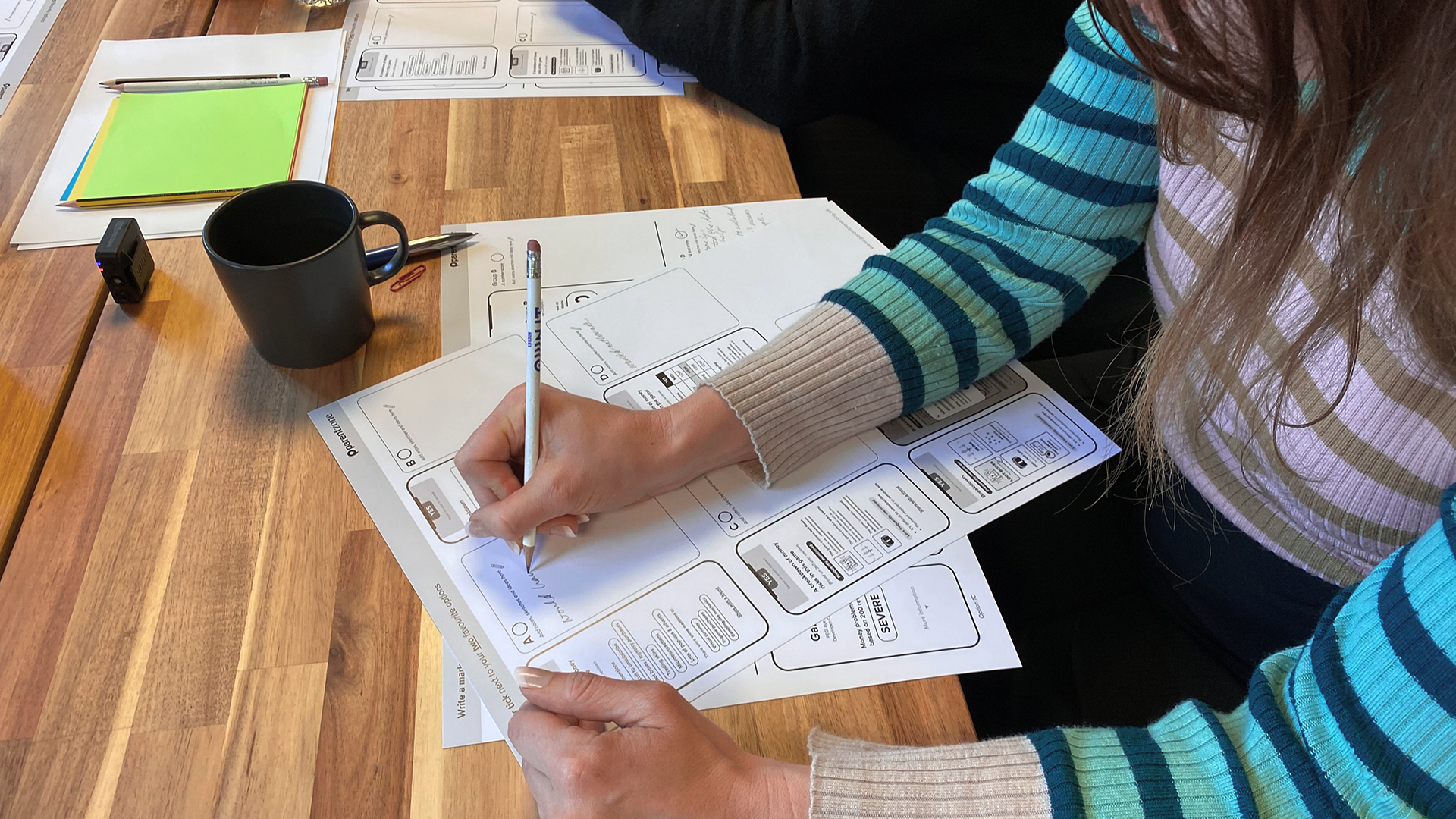
We recruited eight parents to test the concepts using a human-centred design approach. Paper prototypes were placed in front of them to interact with. They shared their thoughts verbally, through writing, and by sketching ideas of their own, helping us understand what worked, what didn’t, and why.
While their views sometimes differed, all had one thing in common: a child who plays mobile games. Here are some of the things they told us would help them…
1. A quick breakdown of the game
Parents described everyday moments where they could imagine using the tool – often quickly and on the go. An at-a-glance summary would help them get a clear sense of a game before deciding whether to explore more detailed information.
2. A clear financial risk score, explained
Parents wanted a simple way to understand financial risk, but not at the expense of clarity. Purely numerical scores felt ambiguous, while binary labels (eg, 'contains risks? yes') were considered too simplistic. Combining a straightforward numerical score (eg, out of five or ten) with a text label worked best. Crucially, parents wanted to understand why a game received its score, including the methodology and supporting evidence.
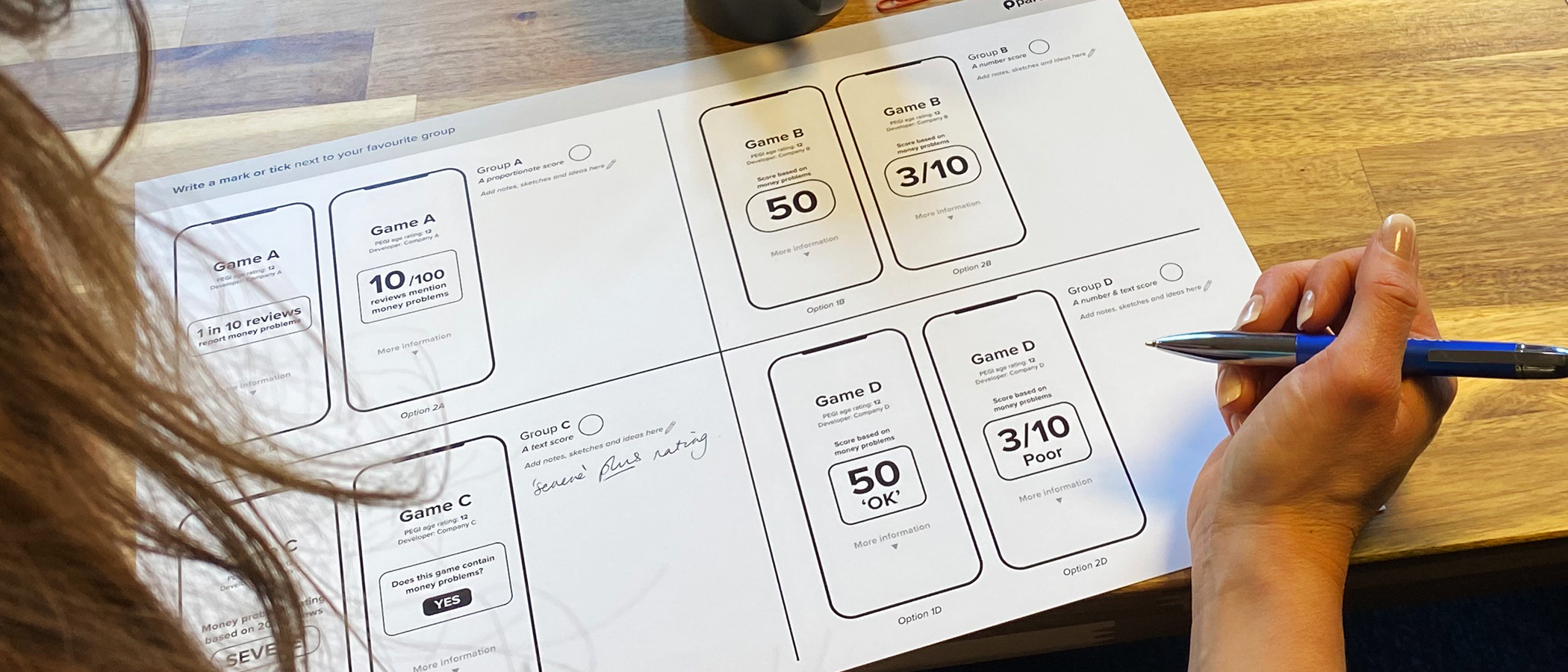
A selection of design concepts on mobile screens
3. Essential information, in one place
The more parents could learn about a game, the better. They wanted to see images and short gameplay videos, understand which financial risks were present, and access simplified explanations of unfamiliar concepts – all without endless scrolling or being sent to multiple pages.
4. Clear, plain-language terminology for loot boxes and skins
Some parents were familiar with terms such as loot boxes, skins, and pay-to-win mechanics; others were not. Parents valued having clear definitions in simple language, helping them understand both the terminology and its real-world implications for their child.
“It kind of demystified the language, which I don't really understand necessarily. Like I don't know what loot boxes and skins trading are. So it was quite easy to kind of understand what those things were.”
5. An uncluttered, visually appealing design
It was agreed that icons helped communicate ideas quickly and made the interface feel more approachable, particularly for those who are visual learners. Certain layouts, such as dense tables, felt off-putting – “I look at spreadsheets all day,” one parent told us. Feedback highlighted the importance of presenting necessary information in a way that feels visually engaging, and introducing colour.
6. The ability to share with other parents
A simple “share with a friend” feature was extremely popular. Parents described group chats with other parents as a key way to exchange information and fill knowledge gaps together. Being able to share game information easily within these networks was seen as highly valuable.
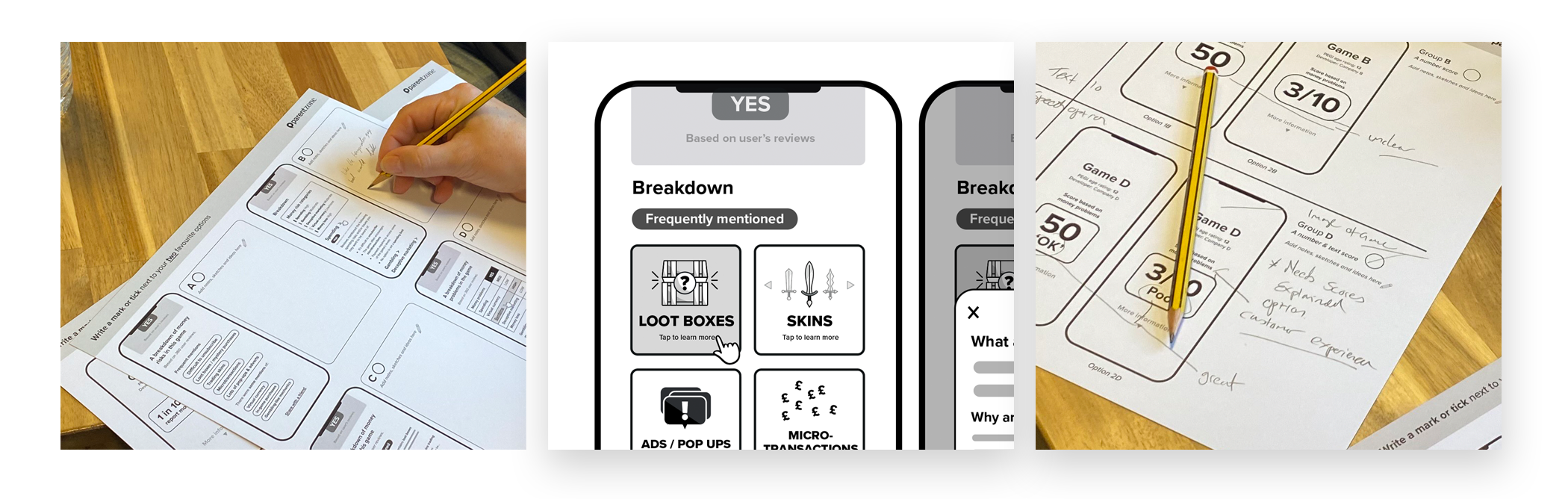
Turning feedback into a product
Speaking directly with parents has given us the confidence to move into the next stage of product design. Our early concepts helped clarify what matters most, and we are now refining them into more detailed, interactive prototypes – adding colour, improving visual hierarchy, and applying the design principles parents responded to most strongly.
As the work begins to take shape as a viable product, we are collaborating more closely as a wider product team. Our software engineers are exploring how large volumes of customer reviews can be synthesised into a clear, reliable score, using AI and large language models (LLMs). In parallel, we are continuing to examine individual financial risk categories to ensure our scoring system is as robust as possible.
Listening to users matters. Our next digital prototypes will be tested with more parents, and their feedback will continue to shape the product as it develops. By combining our digital expertise with a human-centred design philosophy, we aim to create a tool that genuinely helps parents in making informed decisions about games, and has a positive effect on their children.