

Investing in parents is an investment in the future
Vicki Shotbolt – Parent Zone founder and CEO
We’re half way through a decade that began with a pandemic. The top search queries on Google included, ‘When will lockdown end?’ and ‘Bread recipes’. That seems to pretty much sum up the mood at the time. When disaster strikes, eat carbs.
The mood at Parent Zone is reflective as we approach the end of 2025. It has been an important year for the work that we do, including some significant changes to the environment in which parents are parenting. The online safety act is now in force. New laws have been put in place to deal with digital offences like cyberflashing and intimate image abuse, and the national curriculum review has added media literacy and financial literacy to the curriculum under citizenship.
The question we’re asking is whether these changes are being felt by parents – and the immediate answer is ‘not yet’. Research by More in Common shows that 64% of parents remain deeply concerned about online safety. Furthermore, over half of parents think politicians and tech companies aren’t taking the issue of keeping children safe online seriously enough. Given we have just regulated the internet for the first time, with an act that took over five years to make it to the statute books, that seems at odds with the actual level of work that has been done. So what’s going on?
Our assessment is that parents haven’t been listened to.
A category error has been made because campaigners and policy makers have tried to do to families rather than with and for. The state has tried to parent and it can’t. It can create the conditions in which it is easier to parent but it can’t reach into families and raise children. It can’t know what’s best for individual family circumstances. Rather than start from a position that asked, ‘what can we do to help parents?’, the thought process was ‘what’s right for children?’ You might think those questions get you to the same place and they ultimately do, but the journey to that place is very different. If we’d started by asking how to make it easier to parent children in digital spaces, we wouldn’t have arrived at hundreds of different parental controls.
More likely, parents would have asked for solutions like digital accounts for children that only need to verify age once. Devices that are age aware with functionality that can be turned off. A statutory duty of care so that when a platform is aware that a child is being harmed they have a duty to report it. Parents definitely wouldn’t have said it was OK to let the most harmful sites off the hook because most of them are small compared to Meta. Nor would they have overlooked gaming or the increasing commercialisation of childhood. Those are the two things that in the real world of parenting crop up all the time. The state would and should have asked itself how best to protect children’s rights and provided clarity to parents about where their rights end and their children’s rights come first.
Team PZ celebrated when Scotland introduced a total ban on smacking.
The fact that we still allow it in England when it amounts to a ‘reasonable punishment’ is shameful. It also clouds the reality that children’s rights are and should be inviolable, including in the digital world. It is encouraging to see courts around the world start to make judgements about what parents can reasonably consent to on behalf of their child and what they can’t. In Italy a court found that a nursery could not use photos of a child legally based on parental consent, as the best interests of the children prevailed in not having photographs of them in particularly intimate moments of their school and educational experience published online to promote the nursery's activities.
We hope that courts will continue to intervene to clarify what is often perceived as a tension between parental rights and children’s rights. This matters because a focus on child rights as an absolute, a baseline below which we must not go, allows us to also focus on the question of helping children to flourish, and we know the route to that is supporting parents. Not limiting ourselves to only seeing things through a child rights lens – rather making sure rights are protected so that it becomes possible to think about the best ways to facilitate good enough parenting. Children in Australia must be rolling their eyes at the irony of a debate that started with child rights and ended up with them being banned from social media. The digital equivalent of ‘no ball games on the grass’.

How we course correct is the question for 2026.
Can we start to think about what parents need to make the job of parenting doable again? Parent Zone has been at this coal face for twenty years. Working alongside professionals who interact with parents all the time. Here’s what we think would make a difference.
Training for professionals working with parents
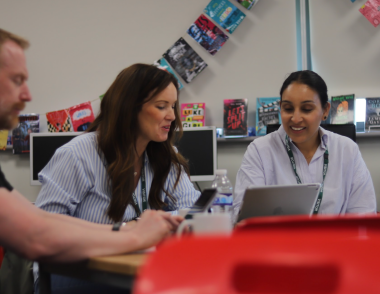
We assume that because a professional deals with parents all the time they are going to find it easy. It’s not. To work with parents you need help. A teacher who has been trained to teach hasn’t also magically discovered how to provide support to a parent who is struggling to enforce boundaries at home. Even professionals who are trained in parenting support (well done those of you who survived the big parenting cull) need resources. Our response has been to launch Everyday Digital Parenting to demystify what works in parenting and to provide resources for professionals to plug and play. It’s the second programme in our Everyday Digital series that started with media literacy. Our network of incredible local champions continues to deliver Everyday Digital Life Skills to parents around the country and we hope their number will continue to grow.
Access to help for parents
Whilst there are excellent reporting routes for parents who find themselves in the horrifying position of needing to report a crime against their child, options for parents who are just struggling with digital parenting remain underfunded and with major gaps. Our work on child financial harms highlighted one such gap for parents trying to get help about money related problems. Despite 68% of parents telling us it was an issue for their family, there is still no national support service. Gambling, scams and even money laundering and sextortion are all things parents are dealing with – alone. We continue to work with a consortium of organisations including the PSHE association, CIFAS, UK Finance, York University and Reason Digital, to map, understand and test solutions to these issues. In 2026 we’ll be releasing work that includes work on a tool to convert virtual currencies in games, information for parents using AI tools to decide whether a game is suitable for their child and a proof of concept for using an LLM to identify financial risks in games.
Future proofing
We’re excited about the future of technology. In the five years it took for the online safety act to snail its way through parliament, technology leapt forward. The future is going to be very different to the past – it always is. AI is a game changer likely to transform the way we interact with computers already bringing innovative wearable technology to families. Meta glasses, Oura rings, Plaud notepins and Bee are all early market examples of a portable, always-on digital AI world. It could be great. It will mean that what we’re worrying about now will seem simple by comparison. The next set of questions are going to be even more transformative for society and we need to start thinking about them now. We run a programme for teachers in partnership with Raspberry Pi and Google DeepMind called Experience AI. It’s just one example of the sort of work that will be needed to help us all try to stay no more than a couple of steps behind the engineers.
If the first half of the decade taught us anything it was not to be complacent.
Things can change fast and parents can’t choose to take a break from parenting whilst they figure it out. Scaled programmes like the ones we run with amazing partners are going to be vital if society is going to adapt to the digital world that is emerging. We have to stop the ‘break things’ and then ‘fix things’ paradigm and pivot to an approach that puts families at the centre of everything.
Recognising that parents raise children and investing in supporting them would be an investment in the future. There are tiny signs the page is turning. Removing the two-child benefit cap is the first sign in a very long time that this government understands the way to help children is to help parents.
Parent Zone is going to be pushing for more. We’re looking forward to pushing with you.
Interested in collaborating with Parent Zone? Get in touch: info@parentzone.org.uk
Training, Professional Resources & Events
AI literacy? Media Literacy? Financial literacy? We've got it.
Explore our range of free and subscription programmes to find what you need.